
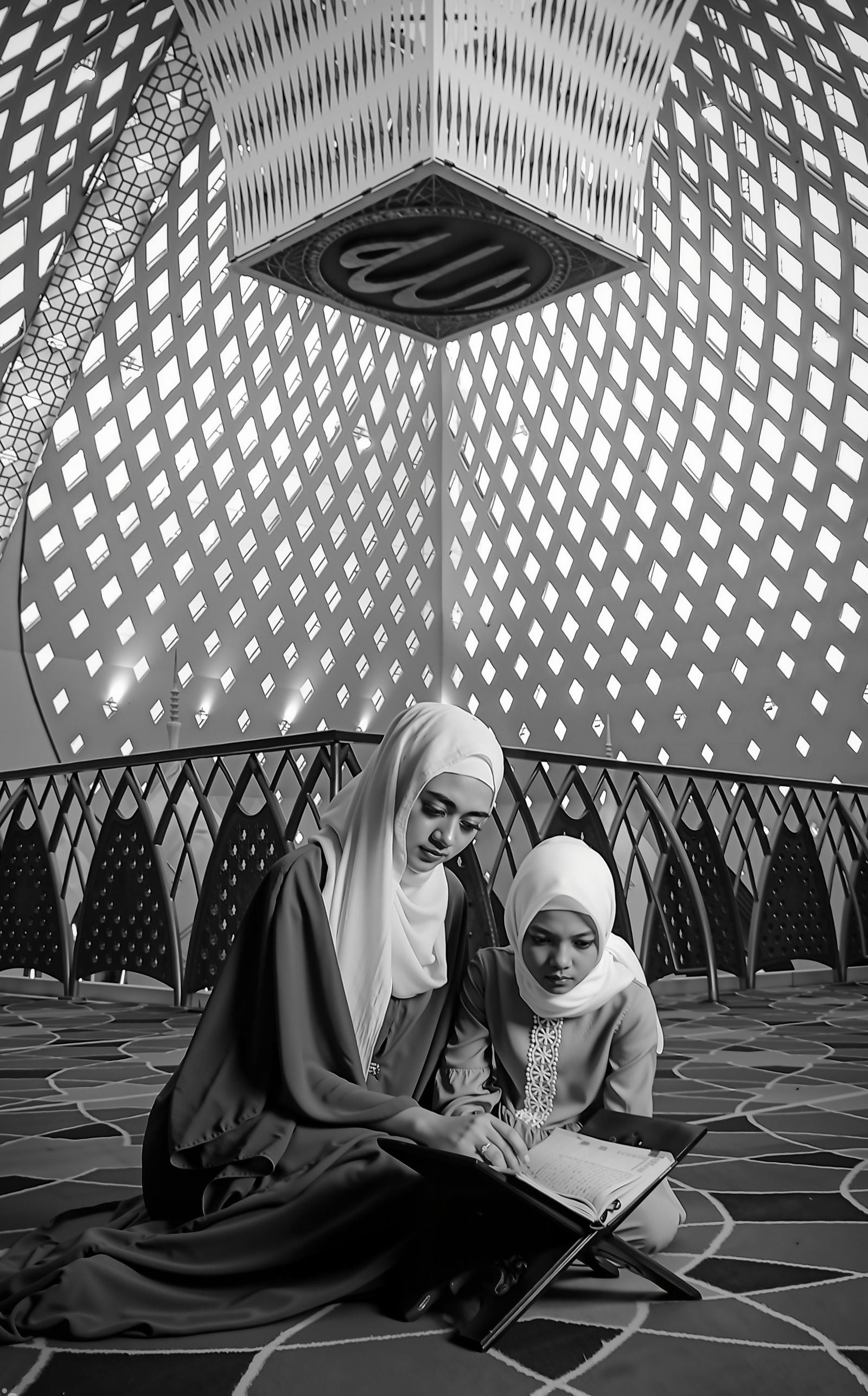
You don't need to be a scholar to plant the Quran in your child's heart: only a little time each day, a patient heart, and a rhythm you can keep.
Almost every mother who dreams of raising children who carry the Quran in their heart arrive at the same quiet question: can I really do this at home? The honest answer is yes. For centuries, hifz has passed from one generation to the next, often at a mother's knee. You do not need to be a hafidha yourself, and you certainly do not need to be a scholar. What you need is a little time each day, a warm and patient heart, and a rhythm you can actually keep to support your children's journey with the Quran.
What follows is a gentle map drawn from the advice teachers and hifz mothers return to again and again. None of it is complicated. Most of it is small enough to begin this week.
Work First on Your Own Journey
Children absorb what they see far more than what they are told. Before the first lesson, the most powerful thing you can do as their mother is to develop a strong relationship with the Quran yourself. That way, your child will naturally observe you reciting and memorizing the Quran, and understand that doing so is deeply important as a Muslim. Even something as simple as watching you recite Quran during the day, playing and listening to the Quran in the car, or seeing you sit quietly with the mushaf after salah is invaluable. Make it a priority also to learn tajweed and study the Quran with a qualified teacher to improve your own recitation. This will help you effectively assist your child as they study and memorize the Quran.
Keep it small, keep it daily
If there is one secret hiding inside every success story, it is not talent or marathon sessions, it is consistency. Fifteen unhurried minutes every single day will carry your child further than an hour once a week. Choose a time when your child is fresh and the house is calm: right after breakfast works beautifully for many families, as does in the evening before bed. Then guard that slot like an appointment.
The loop that does the work
Nearly every effective method in memorizing Quran rests on the same simple loop, repeated until an ayah settles:
- Listen. Play a short passage from a reciter, ideally the same reciter each time, and let them hear it two or three times.
- Repeat in small pieces. Break the verse into two- or three-word phrases. Recite each phrase and have your child recite it back five to seven times.
- Cover and recall. Cover the words and ask them to recite from memory, correcting patiently and without frustration.
- Connect. Join the new verse to the one before it, so the passage flows as a single thread rather than separate beads.
Audio is your quiet ally here. Bedtime and car rides are perfect for passive listening, and children often surprise you, absorbing tomorrow's lesson before you have even begun it.
Let them learn by hand
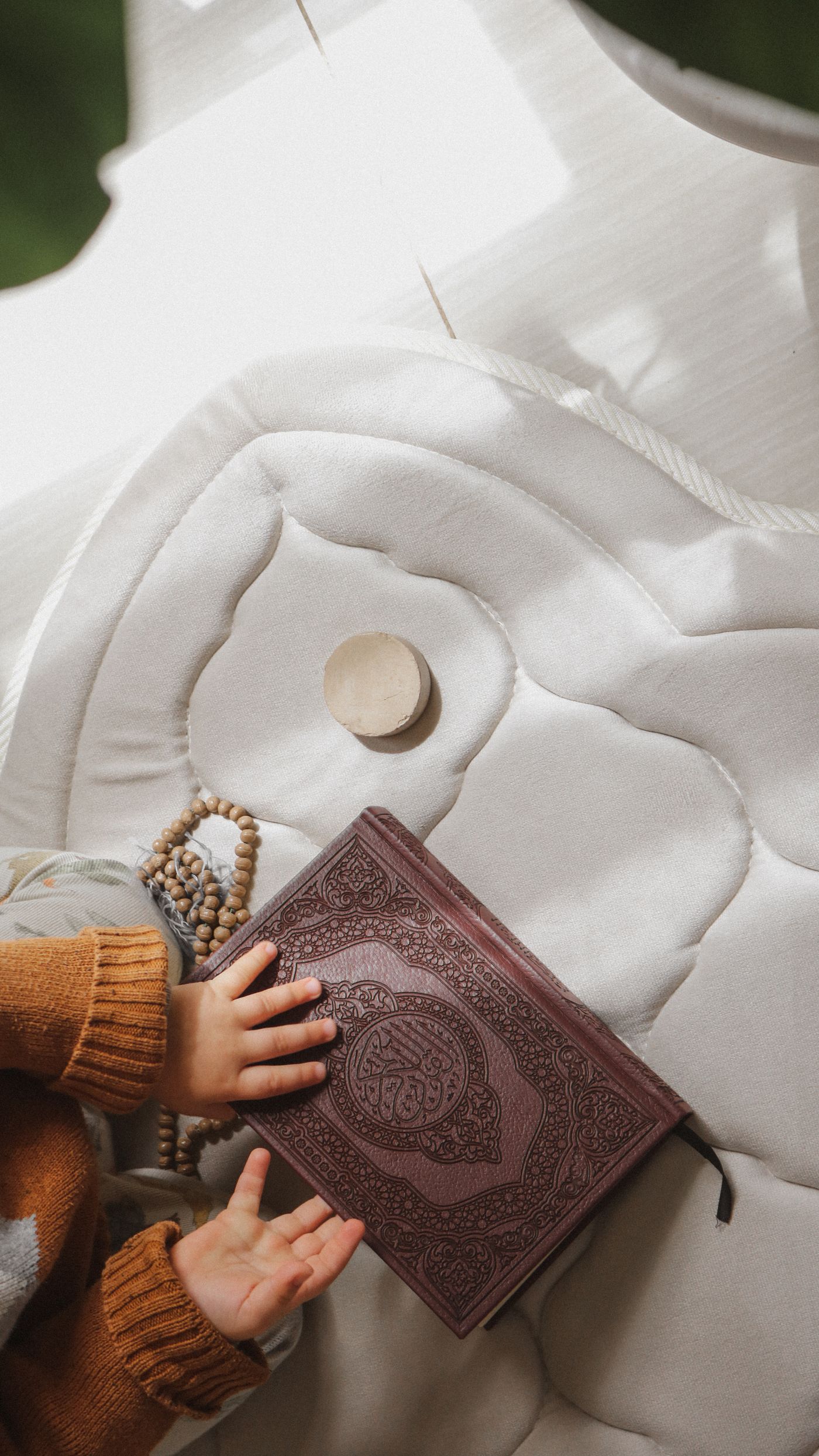
Writing is one of the most powerful memory tools we have. When a child hears a verse, says it, sees it, and writes it, the words are encoded through several senses at once. Research on handwriting shows that forming letters by hand builds stronger, longer-lasting memory than reading or typing alone, so every time your child writes an ayah, you make it easier to recall.
This is the wisdom behind the oldest method of all. For generations, students memorized the Quran by writing verses onto a wooden tablet, or lawh, then reciting, erasing, and writing them again. You can bring that same practice home: have your child copy the verse they are learning, point to each word as they recite it, and rewrite it from memory at the end of the week.
A reusable write-and-erase mushaf makes this effortless: one familiar page to write on and wipe clean, ready for the next verse. Explore our reusable Quran workbooks to make writing a natural part of your child's daily revision.
New pages are exciting. But it is quiet, faithful review that turns fragile memory into something a child owns for life.
Revision is the real secret
Narrated Abu Musa رضي الله عنه:Allah's Messenger (ﷺ) said, “Commit yourself to the Quran, for by Him in whose Hand is my soul, it is surely more prone to break away than a camel in its bind.”Sahih al-Bukhari 5033
The image is striking. Memorized Quran is like a tethered camel: leave it untied, and it slips away. It is faithful review, muraja'ah, that does the deepest work. Begin each session by revisiting yesterday's lesson and a little of what came before it, and only then move on to something new. If new material ever starts to crowd out the old, it is not a failure to pause and simply revise for a while; it is precisely the right instinct. A gentle weekly “test,” recited to you with a small celebration at the end, keeps the whole tree watered.
The long, beautiful road
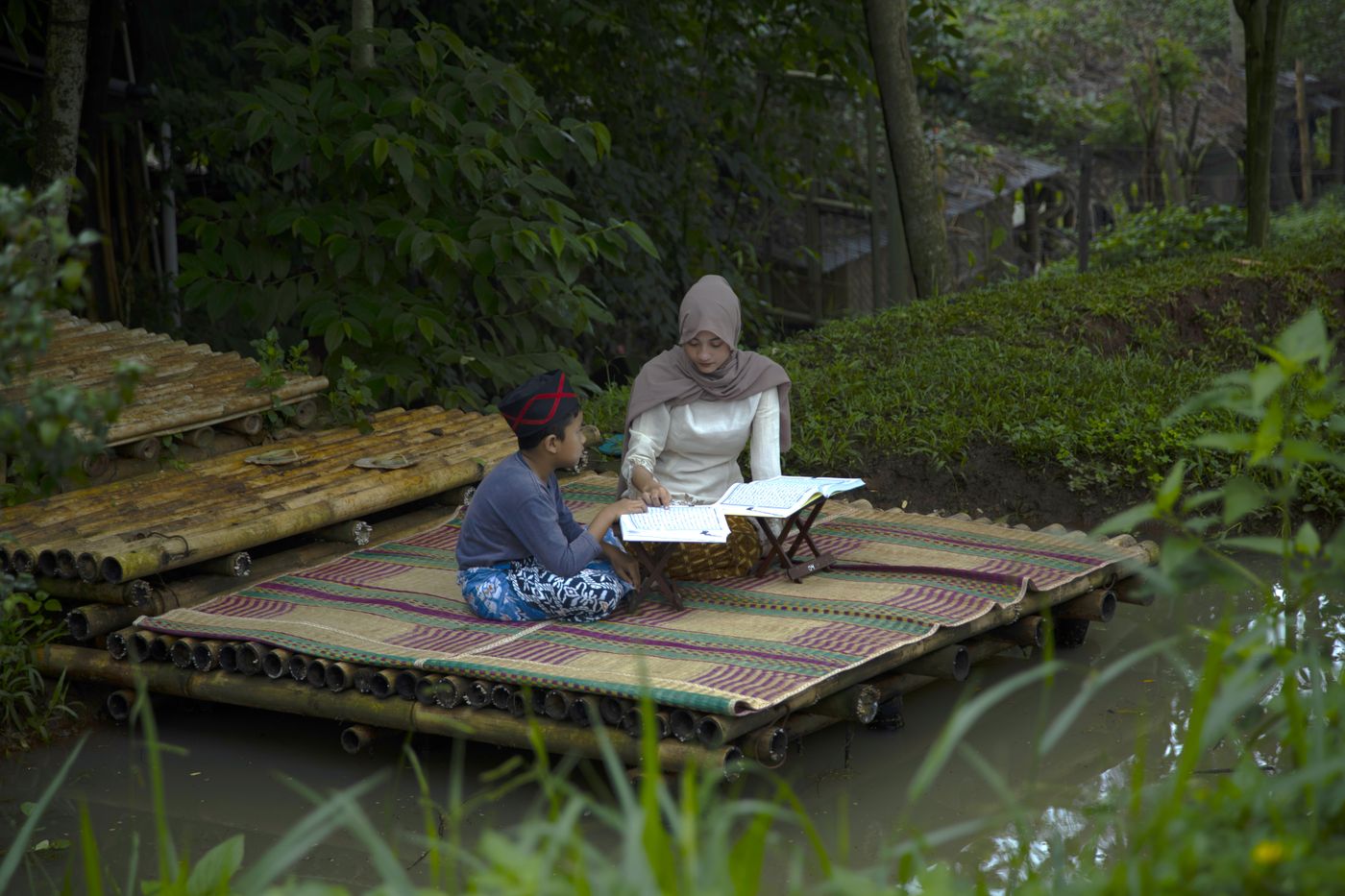
Some children complete the Quran in a few years; others take longer. The timeline matters far less than the relationship you are quietly building in those fifteen minutes a day, with the Quran and with each other. Plant the seed, water it patiently, and trust that what you are nurturing will keep growing long after the lessons are done. You are far more capable of this than you think, and your child is more capable than either of you yet knows.
May Allah grant you and your children success with memorizing the Quran, fill your journey with sincerity, and plant the Quran firmly in your hearts. Aameen.